Incident
2025 Kasanga Massacre, Democratic Republic of Congo
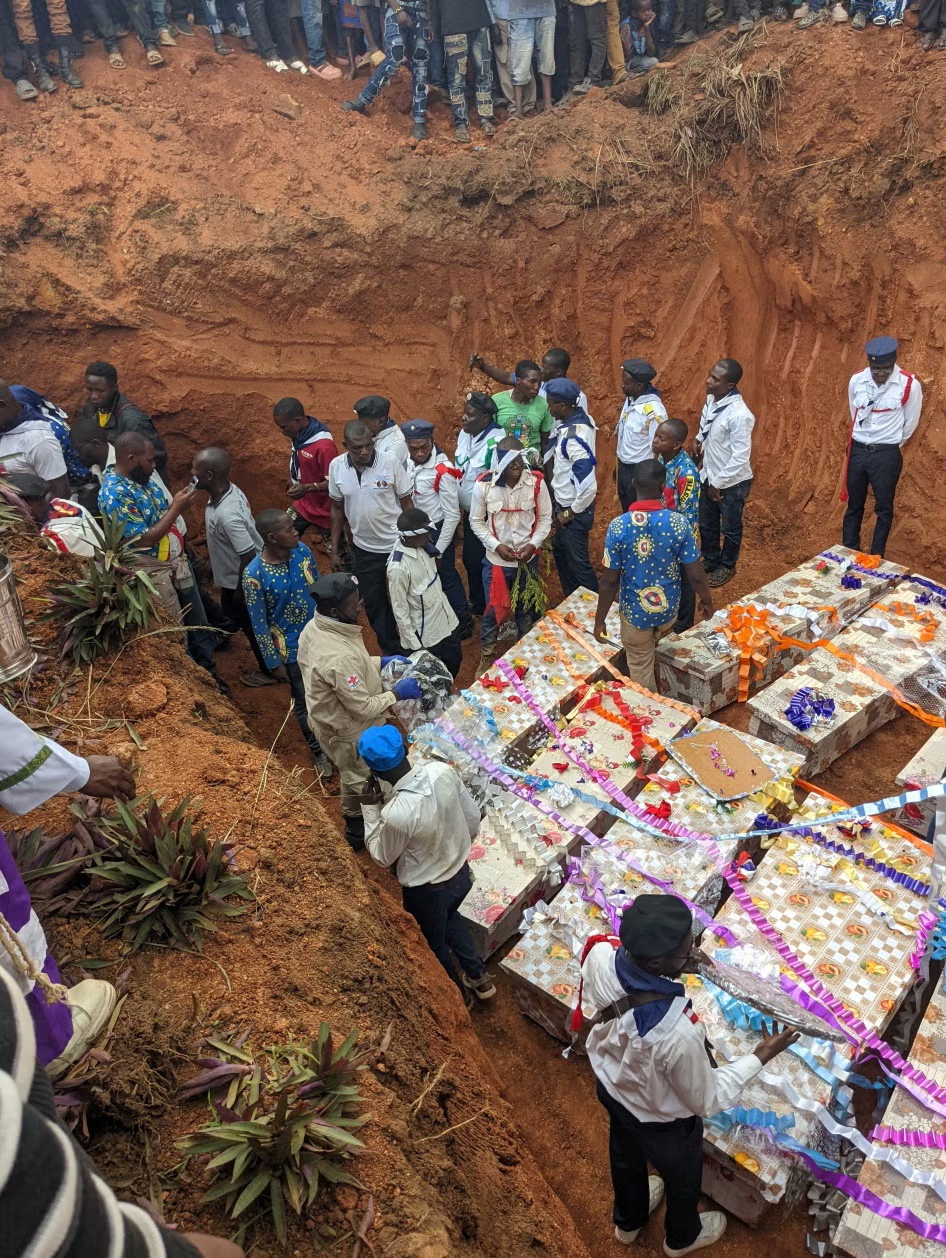
On 12 February 2025, Islamic State-aligned Allied Democratic Forces (ADF-Baluku) militants abducted at least 70 civilians from the village of Mayba in Lubero Territory, North Kivu, Democratic Republic of the Congo, and took them to a Protestant church in the neighbouring village of Kasanga, where the captives were bound and beheaded with machetes. The bodies were discovered inside the church on 14 February 2025. The massacre was confirmed by Aid to the Church in Need and the Vatican's Fides news agency, while the UN peacekeeping mission MONUSCO described the reports as unverified.
Date
2025-02-12
Status
documentedUpdated
2026-07-06
Location
Kasanga (Mayba village), Lubero Territory, North Kivu
Attributed To
Allied Democratic Forces (ADF-Baluku) / Islamic State – Central Africa Province (ISCAP)
Casualties
70 killed
Overview
At around 4:00 a.m. local time on 12 February 2025, armed fighters from the Allied Democratic Forces entered the village of Mayba in Lubero Territory, North Kivu province, in the eastern Democratic Republic of Congo, ordering residents from their homes and seizing at least 20 civilians. The militants withdrew and returned around 6:00 p.m. the same day, surrounding the village and rounding up approximately 50 additional residents. In total, at least 70 civilians — including women, children, and elderly villagers — were marched to a Protestant CECA 20 church in the nearby village of Kasanga, where they were bound and executed with machetes. Local sources reported that the bodies were discovered inside the church two days later, on 14 February 2025.
Reports on the massacre were confirmed by Aid to the Church in Need and the Vatican-affiliated Agenzia Fides, both citing local Catholic Church sources, while MONUSCO, the UN peacekeeping mission in the DRC, stated that the reports of the killings "remain unverified" despite acknowledging a civil society report of over 70 bodies found in the church. The International Committee of the Red Cross declined to confirm or deny the account. The exact motive remains disputed; one local source cited by Aid to the Church in Need suggested some victims were killed because they were unable to continue a forced march carrying looted goods, while other analyses linked the attack to ADF retaliation against an intensified military campaign against the group.
Attribution
The killings were attributed to ADF-Baluku, the faction of the Allied Democratic Forces led by Musa Baluku that pledged allegiance to the Islamic State in 2019 and operates as the Islamic State's Central Africa Province (ISCAP) branch in eastern DRC. The ADF originated in western Uganda in the 1990s before relocating operations into eastern Congo, where it has since become one of the deadliest non-state armed actors in the region; according to the Armed Conflict Location & Event Data Project (ACLED), the ADF was responsible for the second-highest number of civilian killings by a non-state armed group worldwide in 2025.
Context
The Kasanga massacre occurred against a backdrop of intensifying violence in eastern DRC, where the ADF has continued to operate despite a joint Congolese-Ugandan military campaign, Operation Shujaa, launched in November 2021 to contain the group. Analysts noted that the broader collapse of security in North Kivu—compounded by the M23 rebel offensive that captured large parts of the province in early 2025—created conditions that allowed ADF fighters to escalate attacks on civilian and religious communities largely unchecked.
International Response
The massacre drew condemnation from religious and rights organisations, including Aid to the Church in Need, Open Doors, and the European Centre for Law and Justice (ECLJ), which submitted a formal complaint to the UN Human Rights Council on behalf of the Goma-based NGO Africa New Day. The European Parliament introduced a motion condemning the attack on Christian communities in the DRC and calling on the European Commission to review the EU's memorandum of understanding on critical minerals with Rwanda in light of the country's alleged destabilising role in the eastern DRC conflict. Members of the UK Parliament tabled an Early Day Motion condemning the killings as "a heinous act of violence against civilians" and calling for accountability for ADF fighters and stronger civilian protection measures in the region.
Sources
- 1DR Congo: Local ACN sources confirm massacre with 70 bodies found in Lubero church
Aid to the Church in Need International · 2025-02-21 · NGO Report
- 2ACN confirms brutal killing of 70 civilians by ADF forces in DRC
Vatican News · 2025-02-24 · NGO Report
- 3Christians found killed in church in DRC
Open Doors UK · 2025-02-25 · NGO Report
- 4MOTION FOR A RESOLUTION on the targeted attacks against Christians in the Democratic Republic of the Congo
European Parliament · 2025-03-01 · Government Report