Incident
2025 Islamabad Judicial Complex Bombing
On 11 November 2025, a suicide bomber detonated an explosive device outside the District Judicial Complex in the G-11 sector of Islamabad, Pakistan, after failing to gain entry to the building. The blast killed 12 people and injured 36 others in what was described as the deadliest attack on the Pakistani capital in nearly a decade. Jamaat-ul-Ahrar, a faction of Tehrik-i-Taliban Pakistan, claimed responsibility, while Pakistani officials alleged the bomber, an Afghan national, acted on behalf of India-backed and Afghan Taliban-linked proxies, allegations both India and Afghanistan rejected.
Date
2025-11-11
Status
documentedUpdated
2026-07-06
Location
G-11 Sector, near the District Judicial Complex, Islamabad
Attributed To
Jamaat-ul-Ahrar (Tehrik-i-Taliban Pakistan faction)
Casualties
12 killed, 36+ injured
Overview
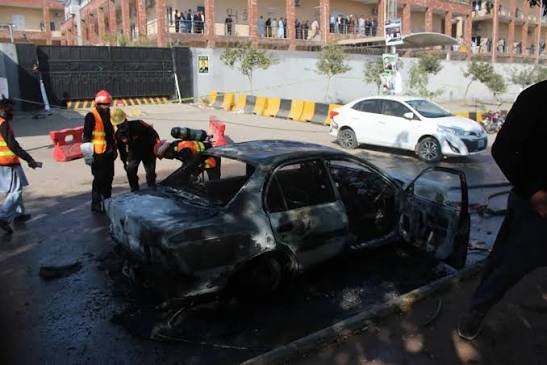
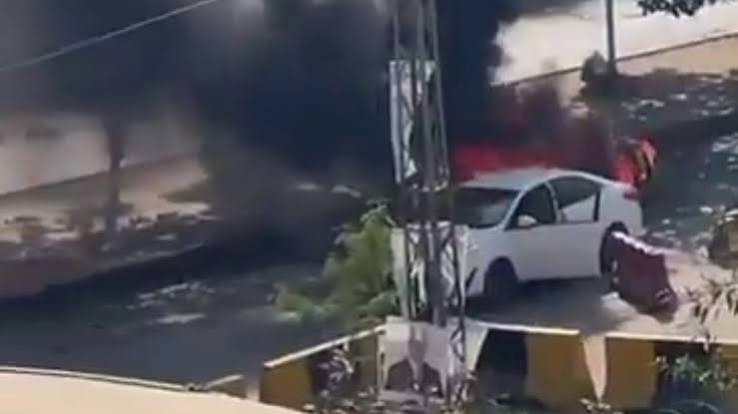
A little after 12:30 p.m. Pakistan Standard Time on 11 November 2025, a suicide bomber attempted to enter the gates of the District Judicial Complex in the G-11 sector of Islamabad, adjacent to the Srinagar Highway. According to officials, after failing to gain entry to the building he waited near the entrance for approximately 10 to 15 minutes before detonating his explosives close to a parked Islamabad Police vehicle. At the time of the blast, nearly 2,000 people, including judges, lawyers, litigants, and court staff, were present at the complex. The explosion killed 12 people and injured 36 others; investigators later recovered the decapitated head of the bomber near the blast site, confirming a suicide attack.
The bombing was described by multiple outlets, including CNN, as the deadliest attack on the Pakistani capital in nearly a decade. It followed a failed militant assault the previous day on a cadet college in Wana, South Waziristan, which Pakistani security forces repelled without major casualties. Sri Lanka's national cricket team, which was touring Pakistan at the time, requested to leave the country following the bombing before ultimately agreeing to relocate its remaining matches to Rawalpindi.
Attribution
Jamaat-ul-Ahrar, a faction operating under Tehrik-i-Taliban Pakistan (TTP), claimed responsibility for the bombing, stating that "judges, lawyers and officials who carried out rulings under Pakistan's un-Islamic laws were targeted," and warning that attacks would continue until Pakistan adopted Sharia law. TTP's central leadership officially denied involvement in the attack. Pakistan's Interior Minister, Mohsin Naqvi, said on 13 November that the suicide bomber was an Afghan national, and separately stated that the attack had been "carried out by Indian-backed elements and Afghan Taliban proxies" linked to the Pakistani Taliban. Defence Minister Khawaja Asif described the country as being in a "state of war" following the bombing.
Legal Proceedings
Pakistani authorities opened a formal investigation the day after the attack. Seven suspects were arrested in Rawalpindi in connection with the case in the days that followed. The investigation remained active as authorities sought to establish the bomber's precise network affiliations and financing.
Context
The bombing occurred amid a broader resurgence of TTP-linked militant activity in Khyber Pakhtunkhwa and along the Afghanistan-Pakistan border since the Afghan Taliban's return to power in Kabul in 2021. Analyst Adam Weinstein of the Quincy Institute for Responsible Statecraft noted that the attack represented one of the first major strikes in Islamabad itself since that resurgence began, describing the capital, with its comparatively heavy security, as "the ultimate litmus test" for the group's reach. The bombing came a day after a foiled attack on a military-run cadet college in Wana, contributing to a sense of an intensifying campaign against the Pakistani state in the weeks preceding it.
International Response
Prime Minister Shehbaz Sharif and President Asif Ali Zardari publicly condemned the bombing, with Sharif vowing that the perpetrators would face justice. Pakistan's government, through official channels, described the Islamabad bombing together with the Wana cadet college attack as among the "worst examples of Indian state terrorism in the region." India's Ministry of External Affairs rejected the allegations as "baseless and unfounded," attributing them to "an obviously delirious Pakistani leadership." Afghanistan's Taliban government, through spokesperson Zabihullah Mujahid, stated that Afghanistan did not want regional instability but reserved the right to defend itself if tensions escalated further.
Sources
- 112 killed, 36 injured in suicide blast outside district court in Islamabad's G-11
Dawn · 2025-11-11 · Journalism
- 2A suicide bomber targets an Islamabad court, killing at least 12 people and wounding 27
NPR / Associated Press · 2025-11-11 · Journalism
- 3At least 12 killed in Islamabad suicide attack – the most deadly attack in the Pakistani capital since 2008
CNN · 2025-11-11 · Journalism
- 4Pakistan Taliban claim responsibility for deadly terror attack in Islamabad
The Guardian · 2025-11-11 · Journalism
- 5Pakistan says Islamabad, South Waziristan bombers were Afghan nationals
Al Jazeera · 2025-11-13 · Journalism