Incident
2025 Bondi Beach Hanukkah Shooting, Sydney
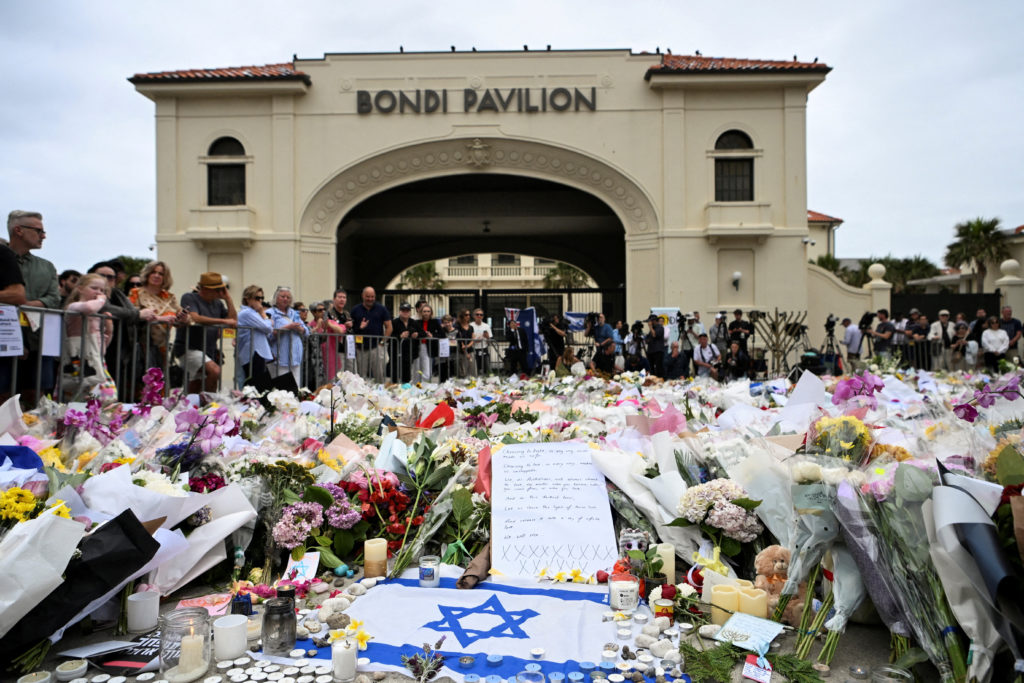
On 14 December 2025, a father-son pair opened fire on a Hanukkah celebration attended by roughly 1,000 people at Archer Park, Bondi Beach, in Sydney, Australia. The attackers, identified as Sajid Akram (father) and Naveed Akram (son), killed 16 people, including a 10-year old girl and wounded more than 40 others before Sajid was shot dead by police; Naveed was wounded and taken into custody. Islamic State flags and propaganda material were found in the attackers' vehicle, and the group claimed the attack was inspired by the extremist ideology of the Islamic State. It was Australia's deadliest mass shooting since the 1996 Port Arthur massacre and the country's deadliest terrorist attack on record.
Date
2025-12-14
Status
documentedUpdated
2026-07-06
Location
Archer Park, Bondi Beach, Sydney, New South Wales
Attributed To
Sajid Akram and Naveed Akram, inspired by Islamic State
Casualties
16 killed, 40+ injured
Overview
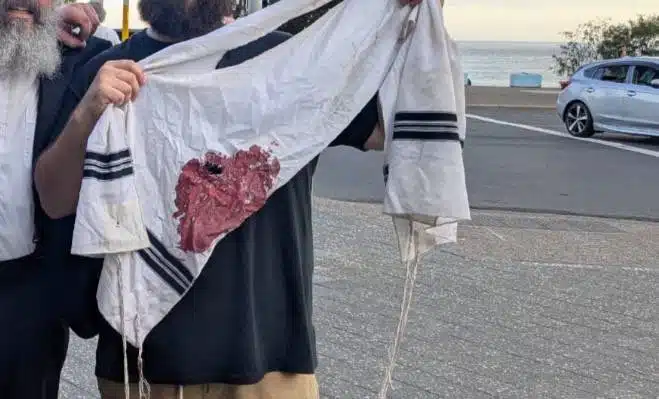
On the evening of 14 December 2025, beginning at approximately 6:42 p.m., two gunmen opened fire on a Hanukkah celebration attended by an estimated 1,000 people at Archer Park in Bondi Beach, Sydney. The attackers, armed with a bolt-action rifle, shotguns, and several homemade explosive devices, killed 15 people, including 11 men, three women, and a 10-year-old girl, and wounded more than 40 others in an assault lasting several minutes. Four civilians attempted to confront the gunmen during the attack; three of them were killed and one was wounded. New South Wales Police responded rapidly and shot dead one of the attackers, identified as Sajid Akram, at the scene. His son, Naveed Akram, was wounded and taken into custody; he has since been charged with 15 counts of murder, dozens of counts of attempted murder, committing a terrorist act, and related offences, and remains on remand awaiting trial.
Investigators recovered Islamic State flags and propaganda material, including a variant of the group's black jihadist banner, from the attackers' vehicle at the scene. Authorities described the attack as both an antisemitic hate crime and an act of ideologically motivated terrorism, noting that the Hanukkah gathering was deliberately targeted because of the religious identity of its attendees.
Attribution
Australian authorities attributed the attack to Sajid Akram, an Australian permanent resident, and his Australian-born son Naveed Akram, describing their motive as a combination of antisemitism, anti-Zionism, and Islamic State ideology. The Islamic State itself claimed the attack was carried out by supporters inspired by the group, though no direct operational link to IS central command was established in the immediate aftermath. The Islamic State has for years encouraged lone-actor and small-cell attacks against Jewish targets in Western countries as part of its broader propaganda strategy.
Legal Proceedings
Naveed Akram was charged with 15 counts of murder, 40 counts of attempted murder, committing a terrorist act, discharging a firearm to cause grievous bodily harm, placing an explosive device with intent to cause harm, and publicly displaying a prohibited terrorist symbol. He was remanded in custody at Goulburn Correctional Centre pending trial. Australian counter-terrorism police opened a broader investigation into the pair's radicalisation, financing, and any wider network of support, while reviewing whether either attacker had been previously known to security agencies.
Context
The attack was the deadliest mass shooting in Australia since the 1996 Port Arthur massacre, which had prompted sweeping national gun-control reforms, and was described by officials as the deadliest terrorist attack in the country's history. It occurred amid a broader rise in antisemitic incidents recorded in Australia and other Western countries following the escalation of the Israel-Gaza conflict from October 2023 onward, with Jewish community events and institutions reporting heightened security concerns in the lead-up to the attack.
International Response
The attack drew widespread condemnation from the Australian government, Jewish community organisations, and international leaders, including expressions of solidarity from Israel, the United States, and the United Kingdom. Australian Prime Minister's office announced a review of security arrangements at religious and community events nationwide, and community leaders called for expanded protections for Jewish institutions. The attack intensified debate in Australia over firearms regulation, counter-terrorism monitoring of self-radicalised individuals, and the online spread of extremist propaganda linked to the Islamic State.
Sources
- 1At least 15 killed in mass shooting at Hanukkah event on Sydney's Bondi Beach
NPR · 2025-12-14 · Journalism
- 2Australia sees deadliest shooting since 1996 at Hanukkah celebration
Axios · 2025-12-14 · Journalism
- 3Bondi Beach shooting: Islamic State flags found in suspect's car after shooting that killed 15
NBC News · 2025-12-15 · Journalism
- 4Bondi Beach shooting: Loved and forever remembered. These are the victims of the antisemitic massacre
CNN · 2025-12-15 · Journalism