Incident
2023 Peshawar Police Lines Mosque Bombing
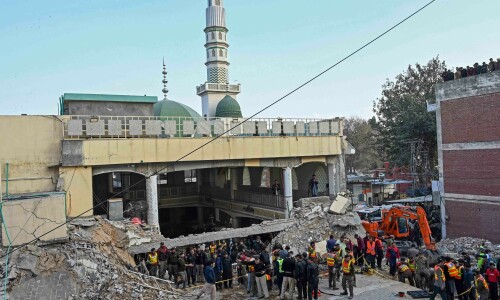
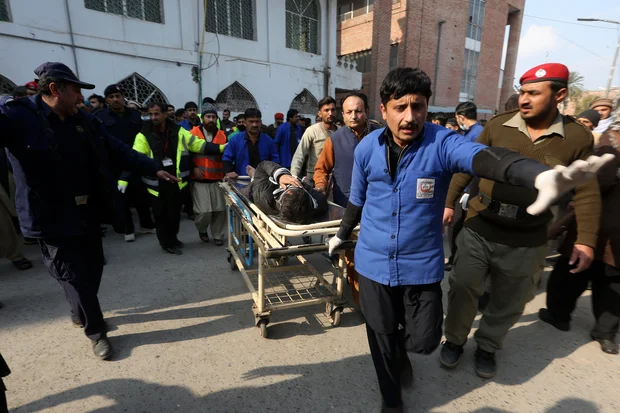
On 30 January 2023, a suicide bomber disguised as a police officer infiltrated the Police Lines mosque in Peshawar during Zuhr congregational prayers and detonated a vest containing 12 kilograms of TNT, killing at least 84 people and injuring 217. More than 90 percent of the casualties were police officers. The attack occurred inside one of Pakistan's most heavily secured compounds, housing the Khyber Pakhtunkhwa Police headquarters. Jamaat-ul-Ahrar, a faction of the Tehreek-e-Taliban Pakistan, claimed responsibility.
Date
2023-01-30
Status
documentedUpdated
2026-06-26
Location
Peshawar, Khyber Pakhtunkhwa
Attributed To
Jamaat-ul-Ahrar (TTP faction)
Casualties
84 killed, 217+ injured
Overview
At approximately 1:30 p.m. Pakistan Standard Time on 30 January 2023, a suicide bomber detonated an explosive vest inside the Police Lines mosque in Peshawar, Khyber Pakhtunkhwa, during the Zuhr congregational prayer. The mosque is located within a high-security compound housing the Khyber Pakhtunkhwa Police headquarters and several government offices. The blast killed at least 84 people and wounded 217. More than 90 percent of the casualties were police officers who had gathered for midday prayers.
The attacker, an Afghan national referred to as "Qari," gained entry by disguising himself as a police officer. He was transported by motorcycle to the Rahman Baba Graveyard in Peshawar, where he changed into a police uniform and strapped on a vest containing approximately 12 kilograms of TNT. He was then dropped at the edge of Peshawar's Red Zone and walked into the Police Lines compound through multiple security checkpoints before detonating among the congregation.
Attribution
Jamaat-ul-Ahrar, a splinter faction of the Tehreek-e-Taliban Pakistan (TTP), claimed responsibility for the attack. Senior Jamaat-ul-Ahrar member Sarbakaf Mohmand stated the bombing was carried out in retaliation for the death of Jamaat-ul-Ahrar founder Omar Khalid Khorasani, whom Pakistani security forces killed in August 2022. The TTP's central spokesman separately denied responsibility, citing an internal policy against attacking mosques — a denial widely regarded as a factional distancing rather than a credible repudiation. Pakistani authorities attributed the attack to the broader TTP network given Jamaat-ul-Ahrar's operational integration with it.
Legal Proceedings
Pakistani authorities launched an immediate investigation led by the Khyber Pakhtunkhwa Counter-Terrorism Department. Within 48 hours, Peshawar police chief Sahibzada Sultan announced the arrest of multiple suspects. Among those apprehended was Wali, the motorcyclist who had transported the bomber to the site, provided him with the police uniform and suicide vest, conducted pre-attack reconnaissance, and received 200,000 rupees through the hundi-hawala system following the bombing. Wali was also linked to coordination of prior Jamaat-ul-Ahrar attacks. The attack exposed significant failures in compound security, prompting an official inquiry into how the perpetrator passed through multiple checkpoints inside one of Pakistan's most fortified installations.
Context
The attack was the deadliest single incident in Peshawar since a Taliban assault on the Army Public School in December 2014, which killed 132 children. The Police Lines mosque had historically been considered among the safest sites in Peshawar given its location within a sealed military-police compound. The bomber's successful infiltration through layered security checkpoints — using a stolen or fabricated police uniform — exposed critical failures in identity verification protocols within the compound.
The attack came during a broader surge in TTP-affiliated violence in Khyber Pakhtunkhwa following the collapse of a ceasefire between the Pakistani government and TTP in November 2022. Jamaat-ul-Ahrar's framing of the attack as retaliation for the killing of its founder reflects the faction's ongoing campaign to avenge the degradation of its senior leadership through Pakistani military operations.
International Response
Pakistani Prime Minister Shehbaz Sharif condemned the attack, stating it was incompatible with Islam and that "the entirety of Pakistan stands against the menace of terrorism." Former Prime Minister Imran Khan also condemned the bombing and called for improved intelligence gathering and better equipment for police forces. Interior Minister Rana Sanaullah and Foreign Minister Bilawal Bhutto Zardari issued formal condemnations. On 1 February 2023, dozens of police officers held protests in Peshawar demanding a transparent investigation into the security failures that allowed the attacker to penetrate the compound. Throughout February 2023, mass protests involving thousands of people were held across Khyber Pakhtunkhwa demanding government accountability and an end to militancy.
Sources
- 1Peshawar, Pakistan blast: Death toll rises to at least 100 in mosque suspected suicide bombing
CNN · 2023-01-31 · Journalism
- 2Pakistan bombing: Death toll in suicide attack on mosque hits 100
CBS News · 2023-01-31 · Journalism
- 3A suicide bombing at Peshawar's Police Lines mosque kills dozens
NPR · 2023-01-30 · Journalism
- 4Pakistan mosque suicide bomber kills 59, wounds over 150
CNBC · 2023-01-30 · Journalism
- 5Terror makes macabre return to Peshawar
The Express Tribune · 2023-01-31 · Journalism