Incident
2023 Hamas-led Attack on Israel (7 October)
In the early morning of 7 October 2023, Hamas and allied Palestinian militant groups launched a coordinated large-scale assault on Israel from the Gaza Strip, firing over 4,300 rockets and breaching the Gaza-Israel security barrier at multiple points. Militants infiltrated 21 communities across southern Israel, massacring civilians in kibbutzim including Be'eri and Kfar Aza, and attacking the Supernova music festival near Kibbutz Re'im. Approximately 1,200 people were killed — the deadliest single day for Jewish people since the Holocaust — and more than 4,000 were injured. Around 251 people were abducted and taken to Gaza as hostages. Human Rights Watch and Amnesty International documented the killings and abductions as crimes against humanity and war crimes. The International Criminal Court issued arrest warrants for Hamas leadership.
Date
2023-10-07
Status
documentedUpdated
2026-06-26
Location
Southern Israel
Attributed To
Hamas (Izz ad-Din al-Qassam Brigades)
Casualties
1200 killed, 4000+ injured
Overview
At 6:29 a.m. on 7 October 2023 — the Jewish holiday of Shemini Atzeret/Simchat Torah — Hamas's military wing, the Izz ad-Din al-Qassam Brigades, launched a simultaneous multi-front assault on Israel from the Gaza Strip. The attack opened with a barrage of at least 4,300 rockets fired into Israeli territory, designed to overwhelm the Iron Dome air defence system and force Israeli civilians into shelters. Within minutes, thousands of Hamas fighters and allied militants from Palestinian Islamic Jihad and other groups breached the Gaza-Israel security barrier at dozens of points using bulldozers, explosive charges, and paragliders.
Militants infiltrated 21 communities in the Gaza Envelope of southern Israel. The attack killed approximately 1,200 people — more than 800 of them civilians, including 36 children — making it the deadliest single day for Jewish people since the Holocaust. More than 4,000 people were injured. Around 251 individuals were abducted and taken back into Gaza as hostages, including Israeli citizens, soldiers, and foreign nationals.
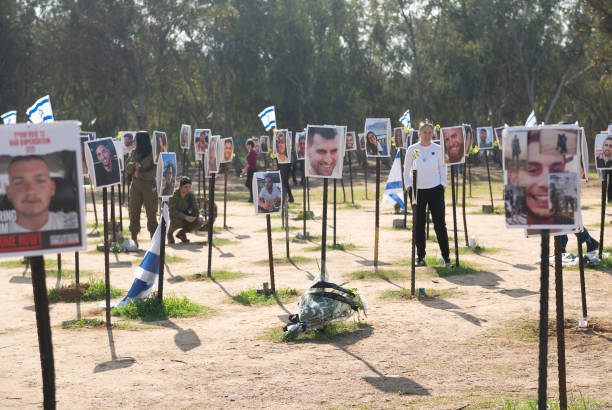
Nova Music Festival (Supernova Sukkot Gathering): The attack struck an open-air music festival near Kibbutz Re'im that had drawn approximately 3,500 attendees. A force of around 110 Hamas fighters on pickup trucks and motorcycles — initially headed elsewhere — redirected toward the festival grounds. Militants surrounded the site and opened fire indiscriminately on attendees attempting to flee. 378 people were killed at or near the festival; 44 were taken hostage. Survivors and investigators documented rape and other sexual violence committed by militants against festival-goers.
Kibbutz Be'eri: Around 70 Hamas fighters attacked Be'eri, a kibbutz of approximately 1,200 residents. At least 130 people were killed, including women, children, and infants — constituting roughly 10 percent of the community's entire population. Houses were burned with residents inside. Israeli security forces took approximately 14 hours to fully retake the kibbutz.
Kibbutz Kfar Aza: Around 250 militants attacked Kfar Aza, located approximately 3 kilometres from the Gaza border. 62 residents were killed and 19 were taken hostage. Israeli and international investigators documented killings of infants and elderly residents.
Other sites: Attacks on military bases, civilian residences, and roads across the Gaza Envelope killed soldiers and civilians across 21 communities, including Nir Oz, Netiv Haasara, and Alumim.
Attribution
Hamas's Izz ad-Din al-Qassam Brigades commanded and executed the attack in coordination with Palestinian Islamic Jihad and other groups. Hamas political leader Ismail Haniyeh, Gaza political chief Yahya Sinwar, and al-Qassam military commander Mohammed Deif were identified as the principal architects of the operation. Hamas framed the attack as a military operation against Israeli occupation. Human Rights Watch, Amnesty International, and the UN Independent International Commission of Inquiry each separately found on the available evidence that Hamas and allied groups committed crimes against humanity — including murder, hostage-taking, and sexual violence — and war crimes during the attack.
Legal Proceedings
In May 2024, ICC Prosecutor Karim Khan applied for arrest warrants for Hamas leaders Yahya Sinwar, Mohammed Deif, and Ismail Haniyeh on charges including extermination, murder, hostage-taking, rape, and other sexual violence as crimes against humanity, and murder, hostage-taking, torture, and outrages upon personal dignity as war crimes. The ICC Pre-Trial Chamber issued the warrants in November 2024.
Ismail Haniyeh was killed in Tehran in July 2024 in a strike attributed to Israel. Yahya Sinwar was killed by Israeli forces in Rafah in October 2024. Mohammed Deif was reported killed in an Israeli airstrike in July 2024, though Hamas initially contested this.
Families of victims filed complaints with the ICC and Israeli courts. Israel's own domestic legal and military accountability processes were initiated; however, the ICC separately found that Israel had not demonstrated that it was genuinely investigating the conduct of its own forces in subsequent operations.
Context
The attack was the largest and most lethal assault on Israeli territory since the state's founding in 1948. It fundamentally altered the trajectory of the Israeli-Palestinian conflict, triggering an Israeli military campaign in Gaza that began on 8 October 2023 and continued for an extended period, resulting in mass civilian casualties in Gaza and generating a parallel set of international legal proceedings and investigations into Israeli conduct under the laws of war.
The attack also drew global scrutiny of Hamas's ideology and governance, its use of civilian infrastructure, and its position as a designated terrorist organisation across the United States, the European Union, the United Kingdom, and other jurisdictions. At the same time, the scale of Israel's military response prompted the International Court of Justice to accept South Africa's genocide application in January 2024, creating parallel legal tracks examining both the 7 October attack and the subsequent conflict.
International Response
The attack was immediately condemned by the United States, the United Kingdom, the European Union, France, Germany, and dozens of other governments, which affirmed Israel's right to self-defence. US President Joe Biden described the attack as "an act of sheer evil." The UN Secretary-General António Guterres condemned the attack while simultaneously calling for the protection of civilians, a formulation that drew criticism from Israel.
The UN Human Rights Council established an Independent International Commission of Inquiry, which found on reasonable grounds that Hamas and other Palestinian militant groups had committed war crimes and crimes against humanity on 7 October, while also finding that Israeli forces committed war crimes and crimes against humanity in the subsequent military campaign. The UN Office for the Coordination of Humanitarian Affairs (OCHA) tracked the humanitarian consequences of both the attack and the Israeli response as the conflict developed.
Sources
- 1October 7 Crimes Against Humanity, War Crimes by Hamas-led Groups
Human Rights Watch · 2024-07-17 · NGO Report
- 2Targeting Civilians: Murder, Hostage-taking and Other Violations by Palestinian Armed Groups in Israel and Gaza
Amnesty International · 2024-05-01 · NGO Report
- 3Hamas's October 7 Attack: Visualizing the Data
Center for Strategic and International Studies (CSIS) · 2023-10-10 · Academic
- 4Nova music festival: How a rave turned into a frenzied massacre
CNN · 2023-10-21 · Journalism
- 5Two-Year Anniversary of October 7th Attack
US Department of State · 2025-10-07 · Government Report
- 67 October: UN experts call for end of violence and accountability
UN Office of the High Commissioner for Human Rights · 2024-10-07 · Government Report
- 7Statement of ICC Prosecutor on applications for arrest warrants in the situation in the State of Palestine
International Criminal Court · 2024-05-20 · Government Report
- 8October 7 attack
Encyclopaedia Britannica · 2026-06-26 · Journalism