Incident
2019 Pulwama Attack
A vehicle-borne improvised explosive device was driven into a convoy of Central Reserve Police Force vehicles on the Jammu-Srinagar National Highway near Pulwama, Jammu and Kashmir on 14 February 2019, killing 40 CRPF personnel. The attacker was identified as Adil Ahmad Dar, a local recruit of Jaish-e-Mohammed, which claimed responsibility. India responded with an air strike near Balakot in Pakistan on 26 February 2019, triggering the most serious India-Pakistan military confrontation in decades.
Date
2019-02-14
Status
documentedUpdated
2026-06-23
Location
Pulwama, Jammu and Kashmir
Attributed To
Jaish-e-Mohammed
Casualties
40 killed, 0+ injured
Overview
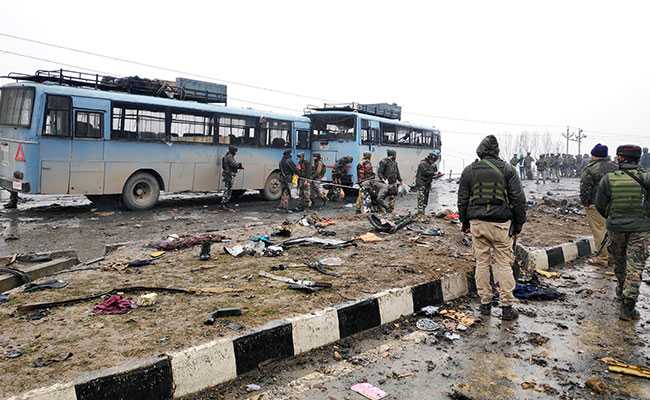
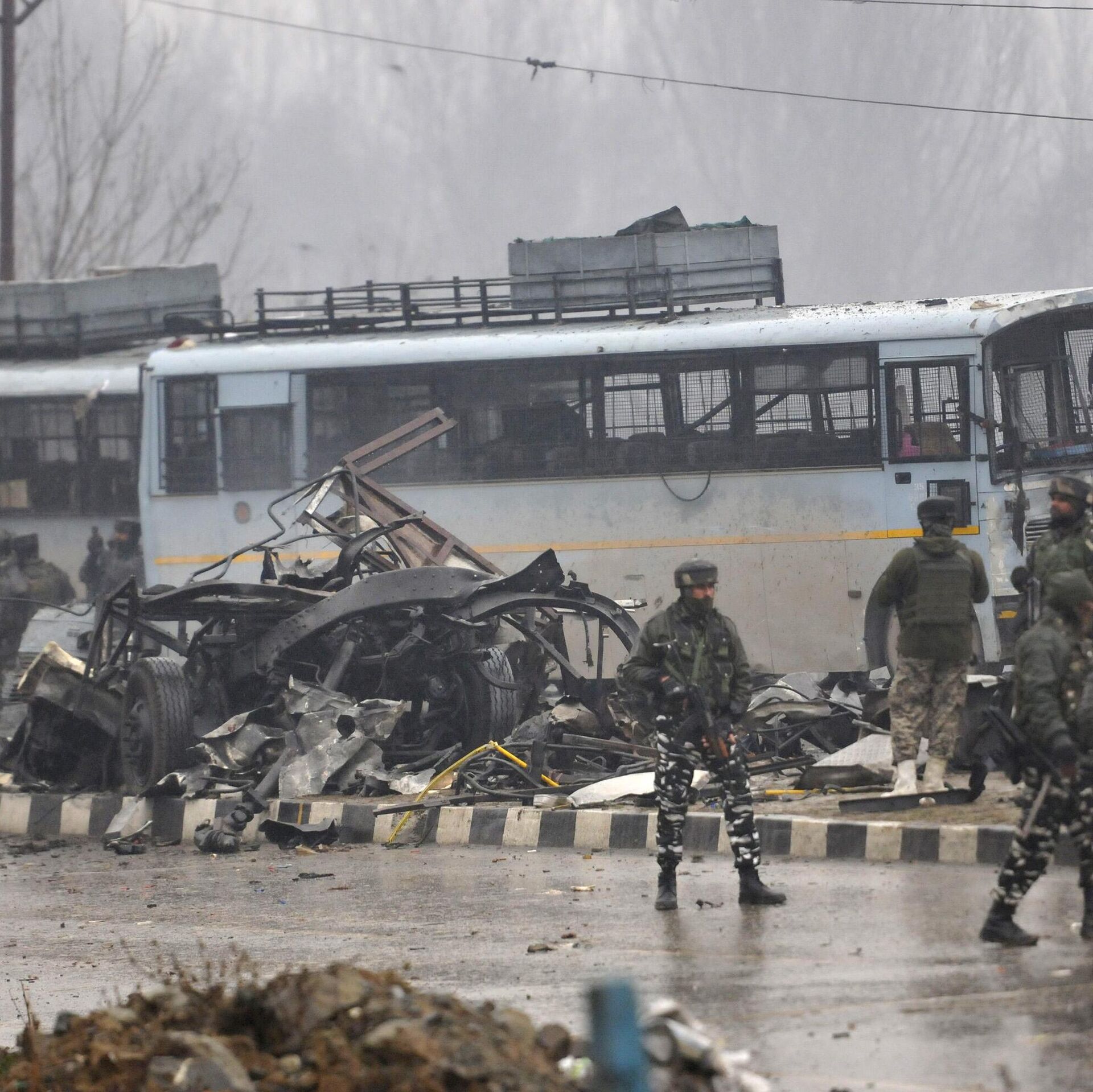
On the afternoon of 14 February 2019, a convoy of approximately 78 buses carrying around 2,500 Central Reserve Police Force personnel was travelling on the Jammu-Srinagar National Highway through Lethapora in the Pulwama district of Jammu and Kashmir. A white Maruti Eeco vehicle laden with a large quantity of improvised explosive, estimated at upwards of 300 kilograms, was driven at high speed into one of the convoy buses and detonated. The blast destroyed the bus entirely and caused severe damage to surrounding vehicles.
Forty CRPF personnel were killed in the explosion, making it the deadliest attack on Indian security forces in Jammu and Kashmir since the insurgency of the early 1990s. No civilians were injured. The scale of the attack, achieved through a single vehicle-borne device rather than a multi-person armed assault, marked a tactical evolution in the methods employed against Indian forces in the region.
Attribution
Jaish-e-Mohammed released a video claiming responsibility shortly after the attack, featuring the bomber, identified as Adil Ahmad Dar, a 20-year-old from Gundibagh village in Pulwama district who had joined JeM approximately a year earlier. Dar's local origin was significant: it indicated that JeM was successfully recruiting from within Kashmir rather than relying solely on operatives infiltrated from Pakistan. Indian investigators and intelligence services attributed the organisational direction of the attack to Pakistan-based JeM leadership, including Masood Azhar and his associates.
Pakistan denied any involvement by organisations operating from its territory and called for evidence to be shared through established diplomatic channels.
Legal Proceedings
The National Investigation Agency of India conducted the investigation and filed a chargesheet in August 2020, naming multiple accused including the deceased bomber and Pakistan-based JeM figures who remain beyond the reach of Indian courts. Pakistani officials identified in the chargesheet have not faced proceedings. No survivors of the immediate planning cell operating inside Kashmir were arrested and tried.
Context
The Pulwama attack produced an intense domestic political response in India, occurring less than three months before a general election. Public grief and anger were widespread. The Indian government faced strong pressure to respond militarily. On 26 February 2019, the Indian Air Force carried out strikes using Mirage 2000 aircraft against a target described as a JeM training camp near Balakot in Khyber Pakhtunkhwa province, Pakistan, the first Indian air strikes inside Pakistani territory since the 1971 war. Pakistan contested India's claims about the effectiveness of the strikes and the following day its Air Force conducted retaliatory sorties into Indian airspace, leading to an aerial engagement in which an Indian pilot, Wing Commander Abhinandan Varthaman, was shot down, captured, and then returned to India.
The confrontation came close to a larger military escalation between two nuclear-armed states before diplomatic intervention helped de-escalate the crisis.
International Response
The United States, China, Saudi Arabia, and the United Arab Emirates were among the governments that engaged both India and Pakistan to urge restraint during the period of maximum tension following the Indian air strikes and Pakistani response. The episode intensified international pressure on Pakistan to take credible action against Jaish-e-Mohammed. In May 2019, the UN Security Council's 1267 Committee added Masood Azhar to the list of designated individuals subject to asset freezes, travel bans, and arms embargoes, after China dropped its long-standing veto of the designation.
Sources
- 1Jaish-i-Mohammed - UN 1267 Sanctions List
United Nations Security Council · 2026-06-23 · Designation Database