Incident
2017 Manchester Arena Bombing
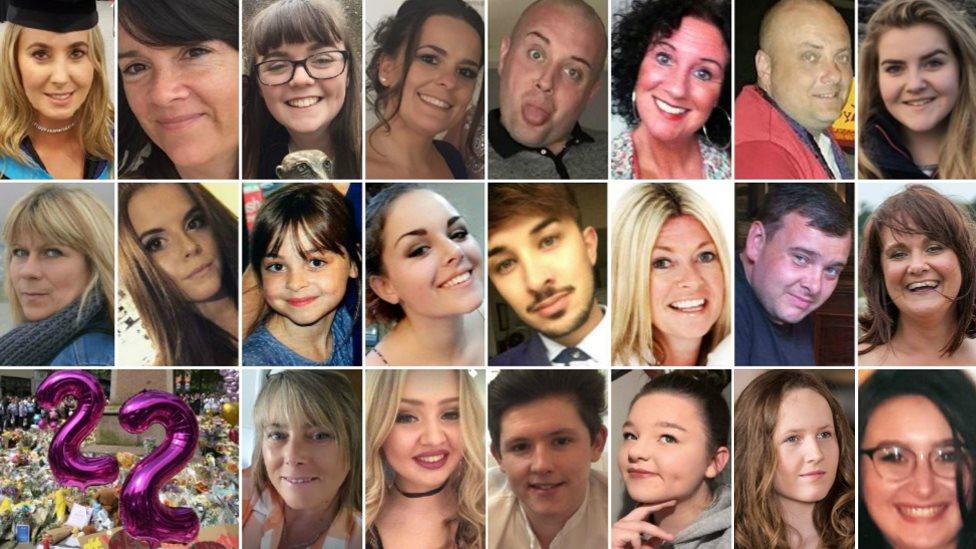
Salman Abedi detonated a shrapnel-packed improvised explosive device in the foyer of Manchester Arena on 22 May 2017 as crowds departed a concert by the artist Ariana Grande, killing 22 people including several children and injuring more than 1,000 others. Islamic State claimed responsibility. Abedi died in the blast; his brother Hashem Abedi, who assisted in planning and procuring components, was convicted in 2020 of 22 counts of murder and sentenced to life imprisonment with a minimum of 55 years. A public inquiry reported on the attack and the emergency response in stages between 2021 and 2023.
Date
2017-05-22
Status
documentedUpdated
2026-06-23
Location
Manchester
Attributed To
Islamic State (claimed)
Casualties
22 killed, 1000+ injured
Overview
At 10:31 p.m. on 22 May 2017, Salman Abedi detonated a homemade explosive device in the City Room foyer of Manchester Arena as thousands of predominantly young concertgoers were leaving a performance by Ariana Grande. The device was designed to maximise casualties: it was constructed around a large quantity of metal nuts that acted as shrapnel, packed into a rucksack that Abedi wore. The blast killed 22 people, including a number of children and teenagers, and injured more than 1,000 others, many with severe lacerations and blast injuries. Abedi died in the explosion.
The attack was the deadliest terrorist incident in the United Kingdom since the 7 July 2005 London bombings and the single worst terrorist attack targeting young people in British history. The demographic profile of the victims, many of whom were fans in their early teens attending with parents or friends, made the attack particularly affecting in the public response.
Attribution
Islamic State claimed responsibility for the attack in a statement released the following day. Salman Abedi was a 22-year-old British national of Libyan heritage born in Manchester. Investigators established that he had recently returned from Libya and had visited Syria. His brother Hashem Abedi was assessed to have played a significant role in the planning, including assisting in sourcing components for the device. The wider network included contacts in Libya where elements of the operation were coordinated.
The extent of any direct operational direction from Islamic State's core leadership versus autonomous radicalised action remains a matter that was explored during both the criminal trial and the subsequent public inquiry.
Legal Proceedings
Hashem Abedi was arrested in Libya following the attack and extradited to the United Kingdom in July 2019. He was tried at the Old Bailey before a jury. On 17 March 2020, he was convicted of 22 counts of murder, one count of attempted murder, and conspiracy to cause explosions. He was sentenced to life imprisonment with a minimum tariff of 55 years before he could be considered for parole. Additional prosecutions of individuals connected to the wider network proceeded separately.
Several other individuals were charged with offences related to the attack or to the provision of support; proceedings involving some defendants continued into the mid-2020s.
Context
The Manchester Arena bombing prompted an immediate review of security arrangements at large public venues across the United Kingdom. Concerns were raised about the adequacy of security in the foyer area, which was accessible without a ticket and therefore not subject to the same screening as the arena interior.
The Manchester Arena Inquiry, chaired by Sir John Saunders, was established to examine the circumstances of the attack and the emergency response. The inquiry reported in three volumes between 2021 and 2023, making findings about failures by security staff employed by Showsec and by British Transport Police to act on suspicious behaviour observed in the hour before the blast, and about deficiencies in the emergency medical response to the injured. The inquiry concluded that lives could have been saved had security and emergency responders acted differently.
The attack also contributed to the passage of the Terrorism (Protection of Premises) Act, known as Martyn's Law after Martyn Hett, one of the victims, which imposed new security requirements on large public venues.
Sources
- 1Man who conspired with his brother to carry out terror attack at Manchester Arena jailed
Greater Manchester Police · 2020-03-17 · Government Report