Incident
2015 Paris Attacks
On the evening of 13 November 2015, Islamic State operatives carried out a coordinated series of attacks across Paris and Saint-Denis, including suicide bombings outside the Stade de France, shootings at several cafes and restaurants, and a sustained assault on the Bataclan concert venue, killing 130 people and wounding more than 400 others. The operation was the deadliest attack on French soil since World War Two. Ringleader Abdelhamid Abaaoud was killed in a police raid five days later, and the trial of surviving accomplices concluded in 2022.
Date
2015-11-13
Status
documentedUpdated
2026-06-23
Location
Paris
Attributed To
Islamic State (ISIL)
Casualties
130 killed, 400+ injured
Overview
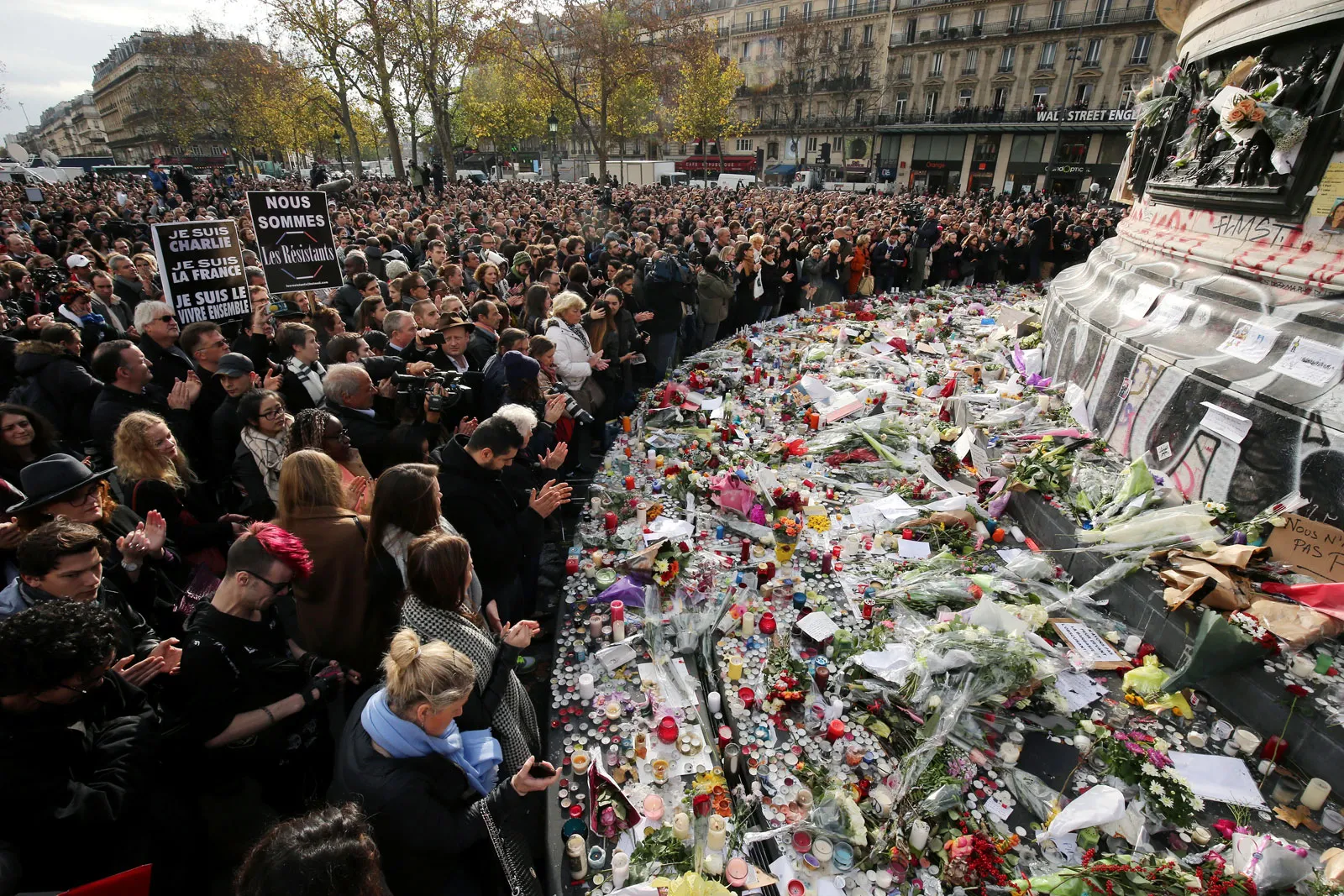
On the evening of 13 November 2015, a coordinated series of attacks unfolded across Paris and the northern suburb of Saint-Denis. Three suicide bombers detonated devices outside and near the Stade de France during an international football match attended by President Francois Hollande, killing one person. Simultaneously, teams of gunmen opened fire at patrons sitting at cafes and restaurants on the rue de Charonne, the rue de la Fontaine au Roi, and in the 10th and 11th arrondissements. The deadliest single attack of the evening occurred at the Bataclan concert venue, where three gunmen shot into the audience at an Eagles of Death Metal concert and took hostages; 90 people were killed at the Bataclan before police assault teams stormed the building.
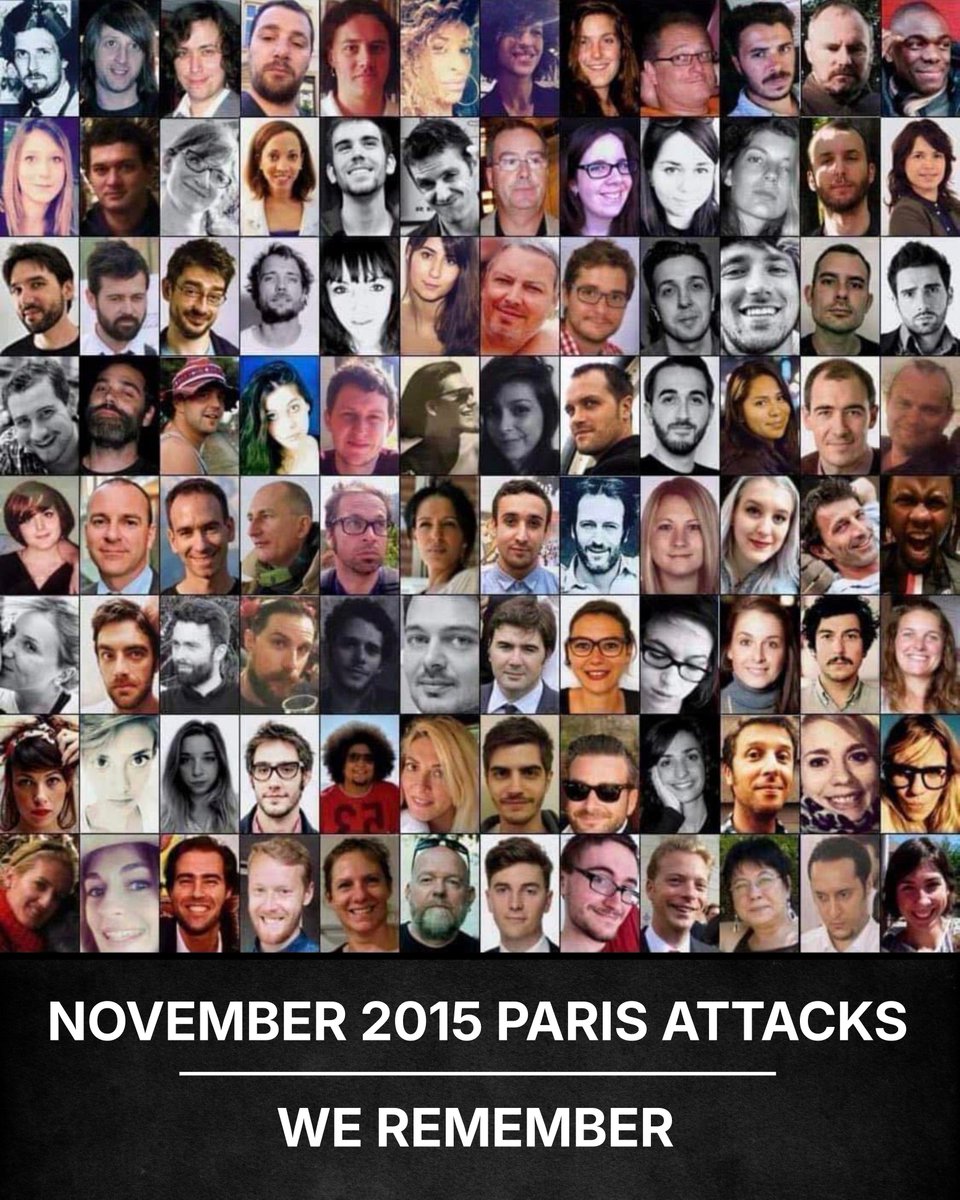
The total death toll reached 130, with more than 400 others wounded. The attacks lasted from approximately 9:20 p.m. until shortly after midnight. They were the deadliest attacks on French soil since the Second World War and the worst terrorist atrocity in Europe since the 2004 Madrid bombings.
Attribution
Islamic State claimed responsibility within hours of the attacks. The operation was directed by Abdelhamid Abaaoud, a Belgian national of Moroccan origin who had travelled to Syria to join Islamic State and returned to Europe to plan attacks. The cell was composed largely of Belgian and French nationals, several of whom had spent time in Islamic State-controlled territory in Syria. The attack demonstrated Islamic State's capacity to conduct mass-casualty external operations using operatives with European passports who had returned from conflict zones. Salah Abdeslam, who was involved in the logistics of the attacks, escaped arrest on the night and was captured in Molenbeek, Belgium on 18 March 2016.
Legal Proceedings
Abdelhamid Abaaoud was killed in a police raid on an apartment in Saint-Denis on 18 November 2015. The principal suspect to survive, Salah Abdeslam, was tried before the special terrorism court in Paris along with 19 co-defendants. The trial, which began in September 2021 and was the largest terrorism trial in French history, concluded in June 2022. Abdeslam was convicted on all charges including murder and sentenced to life imprisonment without possibility of parole, the most severe sentence available under French law. Ten other defendants received sentences ranging from two years to life with the possibility of parole.
Context
France had been a primary target of Islamic State propaganda and recruitment, partly because of French military intervention in Syria and Iraq and partly because of domestic tensions over Islam, secularism, and the integration of communities of North African heritage. The November 2015 attacks came less than a year after the January 2015 Charlie Hebdo and Hyper Cacher attacks in Paris, which had killed 17 people. The French government declared a state of emergency that remained in effect for two years and enacted significant expansions of intelligence and policing powers.
International Response
President Hollande convened an emergency cabinet meeting and addressed the nation, declaring that France was at war. The United Nations Security Council passed Resolution 2249 calling on member states to take all necessary measures to prevent terrorist acts by Islamic State. France invoked Article 42.7 of the Treaty on European Union, the collective defence clause, for the first time in the EU's history, asking member states for assistance. France also intensified airstrikes against Islamic State targets in Syria and Iraq in the days following the attacks. The attacks deepened European concerns about border security and the free movement of individuals within the Schengen area.
Sources
- 1Paris attacks of 2015
Britannica · 2026-06-23 · Academic
- 2The Paris Attacks and the Evolving Islamic State Threat to France
CTC Sentinel, West Point · 2015-11-14 · Academic