Incident
2011 Norway Attacks
On 22 July 2011, a far-right extremist detonated a car bomb in the government quarter of Oslo, killing eight people, then travelled to the island of Utoya and killed 69 people attending a youth Labour Party summer camp over a period of 72 minutes. The attacker, Anders Behring Breivik, acted alone and had published a lengthy manifesto articulating his far-right, anti-Islam ideology. He was convicted in 2012 and sentenced to 21 years of preventive detention, the maximum under Norwegian law, with provisions for indefinite extension. The attacks were the deadliest act of violence in Norway since World War Two.
Date
2011-07-22
Status
documentedUpdated
2026-06-23
Location
Oslo and Utoya
Attributed To
Anders Behring Breivik
Casualties
77 killed, 200+ injured
Overview
At 3:25 p.m. on 22 July 2011, a car bomb packed with fertiliser-based explosive detonated in the government quarter of central Oslo, adjacent to the office of the Prime Minister and several ministry buildings. The blast killed eight people, wounded dozens more, and caused extensive structural damage across several city blocks. The attacker, Anders Behring Breivik, had loaded the bomb in a rented van and detonated it remotely after leaving the area.
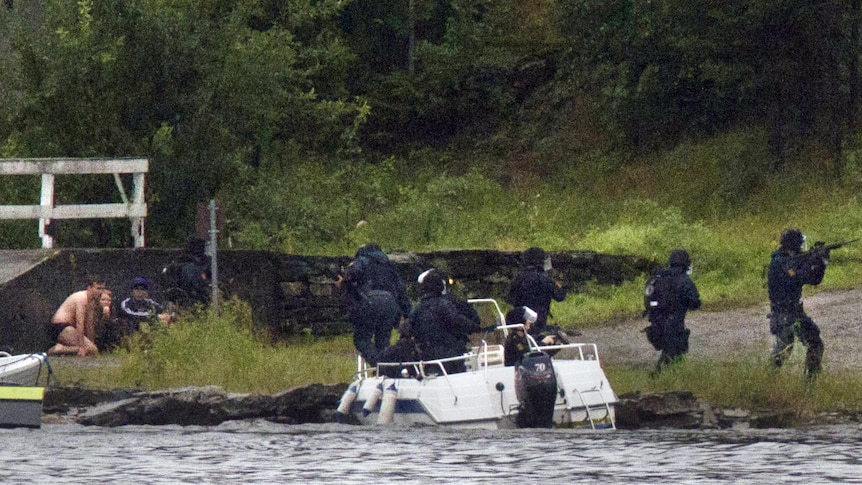
Approximately 90 minutes after the Oslo bombing, Breivik arrived at the island of Utoya in Lake Tyrifjorden, northwest of Oslo, dressed in a home-made police uniform. Utoya was hosting the annual summer camp of the Workers' Youth League, the youth wing of Norway's Labour Party, attended by approximately 600 young people and adults. Breivik opened fire with a Ruger Mini-14 rifle and a Glock 34 pistol, pursuing victims across the island for 72 minutes. Police received calls at 5:27 p.m. and arrived by boat at approximately 6:25 p.m., arresting Breivik without resistance. He had killed 69 people on Utoya, many of them teenagers, and wounded approximately 110 others. The combined death toll from both attacks was 77.
Attribution
Breivik acted entirely alone. Prior to the attack, he had published a 1,500-page manifesto under the title "2083: A European Declaration of Independence," which articulated his ideology of far-right European nationalism, opposition to Islam and multiculturalism, and admiration for historical crusader movements. He had prepared for the attacks over several years, including acquiring firearms legally through Norwegian licensing procedures and producing the bomb using agricultural materials.
Norwegian police and intelligence services had not identified Breivik as a security threat prior to the attack. Post-incident investigations found that earlier risk assessments had focused primarily on jihadist threats and had not adequately considered the potential for mass-casualty violence from far-right domestic actors.
Legal Proceedings
Breivik was charged with terrorism and premeditated murder. His trial before the Oslo District Court began on 16 April 2012. A central issue was his mental state: two competing psychiatric assessments, one concluding he was psychotic and criminally insane and one finding him sane, led to an extensive legal debate. The court ultimately rejected the insanity defence. On 24 August 2012, Breivik was convicted on all charges and sentenced to forvaring, a form of preventive detention with an initial term of 21 years. Norwegian law provides for indefinite extension of preventive detention if the offender continues to pose a danger to society, meaning Breivik may never be released. The sentence was the maximum available under Norwegian law.
Breivik has subsequently filed multiple legal challenges to his conditions of imprisonment, alleging violations of the European Convention on Human Rights, all of which have been rejected by Norwegian courts.
Context
The 2011 Norway attacks demonstrated that mass-casualty political violence could be carried out by a domestic far-right actor without any foreign network or prior criminal record, challenging assumptions embedded in counter-terrorism frameworks that had developed primarily in response to jihadist threats. The attacks prompted reviews of threat assessment processes in Norway and across European security services and contributed to a broader recognition of the need to treat far-right extremism as a serious security concern rather than a marginal phenomenon.
The choice of Utoya as a target was deliberate: the youth Labour Party camp included many children of immigrants and was associated with a multicultural and social democratic political tradition that Breivik's ideology treated as an existential threat to European civilisation.
Sources
- 1Norway Terror Attacks
CNN · 2026-06-23 · Journalism