Incident
2006 Mumbai Train Bombings (7/11)
Seven bombs detonated within eleven minutes on Western Line first-class carriages during the evening rush hour in Mumbai on 11 July 2006, killing 187 people and injuring approximately 700 others. Indian authorities attributed the attack to Lashkar-e-Taiba and the Students Islamic Movement of India, but those attributions have not been legally sustained. A special court convicted twelve men in 2015, but the Bombay High Court acquitted all twelve on 21 July 2025, finding that the prosecution had failed to establish guilt.
Date
2006-07-11
Status
documentedUpdated
2026-06-23
Location
Mumbai
Attributed To
Lashkar-e-Taiba (alleged, legally unresolved)
Casualties
187 killed, 700+ injured
Overview
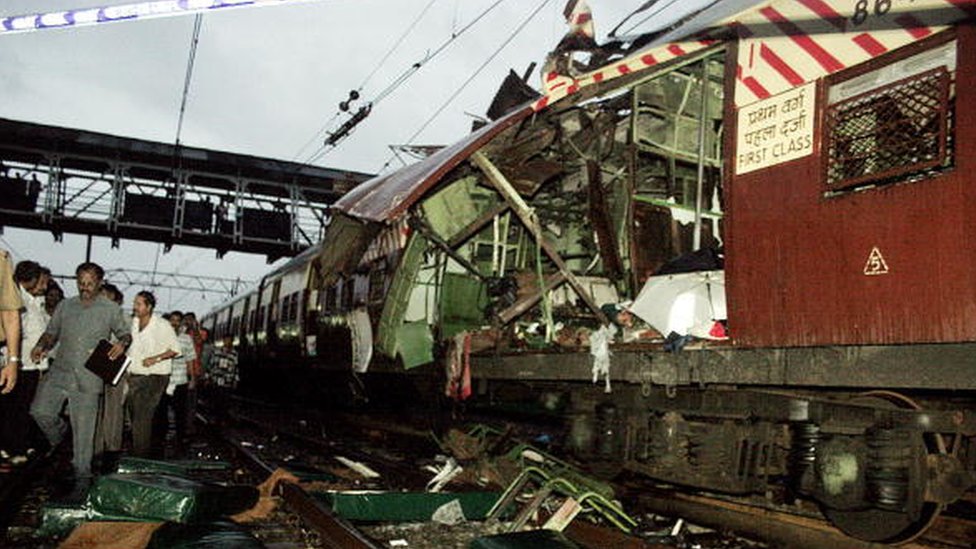
On the evening of 11 July 2006, seven improvised explosive devices detonated aboard first-class carriages of trains on Mumbai's Western Line within a span of eleven minutes, between approximately 6:24 p.m. and 6:35 p.m. The explosions struck trains at or between the stations of Mahim, Matunga Road, Jogeshwari, Bandra, Khar, Borivali, and Mira Road, targeting crowded carriages during the peak of the evening commute. The near-simultaneous timing and geographic spread across the city's busiest commuter rail corridor indicated coordinated planning and prior reconnaissance.
The blasts killed 187 people and injured approximately 700 others. Many victims died at the scene or in the minutes following the explosions before emergency services could reach them. The attack bore similarities to the 2004 Madrid train bombings in its targeting of commuter infrastructure at rush hour.
Attribution
Indian investigators attributed the attack to a network involving the Pakistan-based militant organisation Lashkar-e-Taiba and the Students Islamic Movement of India (SIMI). Maharashtra's Anti-Terrorism Squad arrested twelve individuals and charged them with conspiracy, murder, and offences under anti-terrorism legislation. The prosecution alleged that the defendants had assembled devices using RDX explosive and coordinated the placement of bags on targeted trains.
Pakistan denied any involvement by entities operating from its territory. Lashkar-e-Taiba did not publicly claim responsibility.
Legal Proceedings
The trial before a special court under the Maharashtra Control of Organised Crime Act and the Prevention of Terrorism Act proceeded over several years. In September 2015, the special court convicted all twelve defendants; five were sentenced to death and seven to life imprisonment.
The defendants appealed to the Bombay High Court. On 21 July 2025, a division bench of the Bombay High Court acquitted all twelve accused, holding that the prosecution had failed to establish guilt beyond reasonable doubt and that the evidence presented was insufficient to sustain the convictions. The court's ruling raised questions about the quality of the original investigation and the adequacy of the evidentiary standards applied. The Maharashtra government filed an appeal before the Supreme Court of India, which on 24 July 2025 issued a stay on parts of the High Court ruling pending further consideration. As of the date of this record, no conviction stands in the case and legal responsibility for the attack remains unresolved.
Context
The 2006 Mumbai bombings came two years before the far larger November 2008 attacks on the city. They occurred during a period of intermittent diplomatic engagement between India and Pakistan and reinforced the cycle in which terrorist attacks on Indian soil disrupted bilateral dialogue. The attribution of the attack to Pakistani-linked networks, contested but never fully adjudicated, contributed to sustained Indian pressure on Pakistan to act against militant organisations operating from its territory.
The acquittals in 2025 reignited debates in India about the reliability of terrorism prosecutions, the use of confessions obtained during extended detention, and the standards of evidence applied in special courts operating outside the ordinary criminal justice framework.
Sources
- 1Bombay High Court Acquits All 12 in 7/11 Mumbai Train Blasts Case
Mondaq · 2025-07-21 · Journalism