Incident
2005 London Bombings (7/7)
Four British men detonated homemade bombs during the morning rush hour on 7 July 2005, targeting three London Underground trains and a double-decker bus, killing 52 people and wounding nearly 800 others. The bombers, from West Yorkshire and Luton, had links to al-Qaeda networks. Al-Qaeda deputy Ayman al-Zawahiri claimed partial responsibility in September 2005. A coroner's inquest in 2011 examined the planning, the emergency response, and whether earlier intervention could have prevented the attacks.
Date
2005-07-07
Status
documentedUpdated
2026-06-23
Location
London
Attributed To
Al-Qaeda-linked jihadist cell
Casualties
52 killed, 800+ injured
Overview
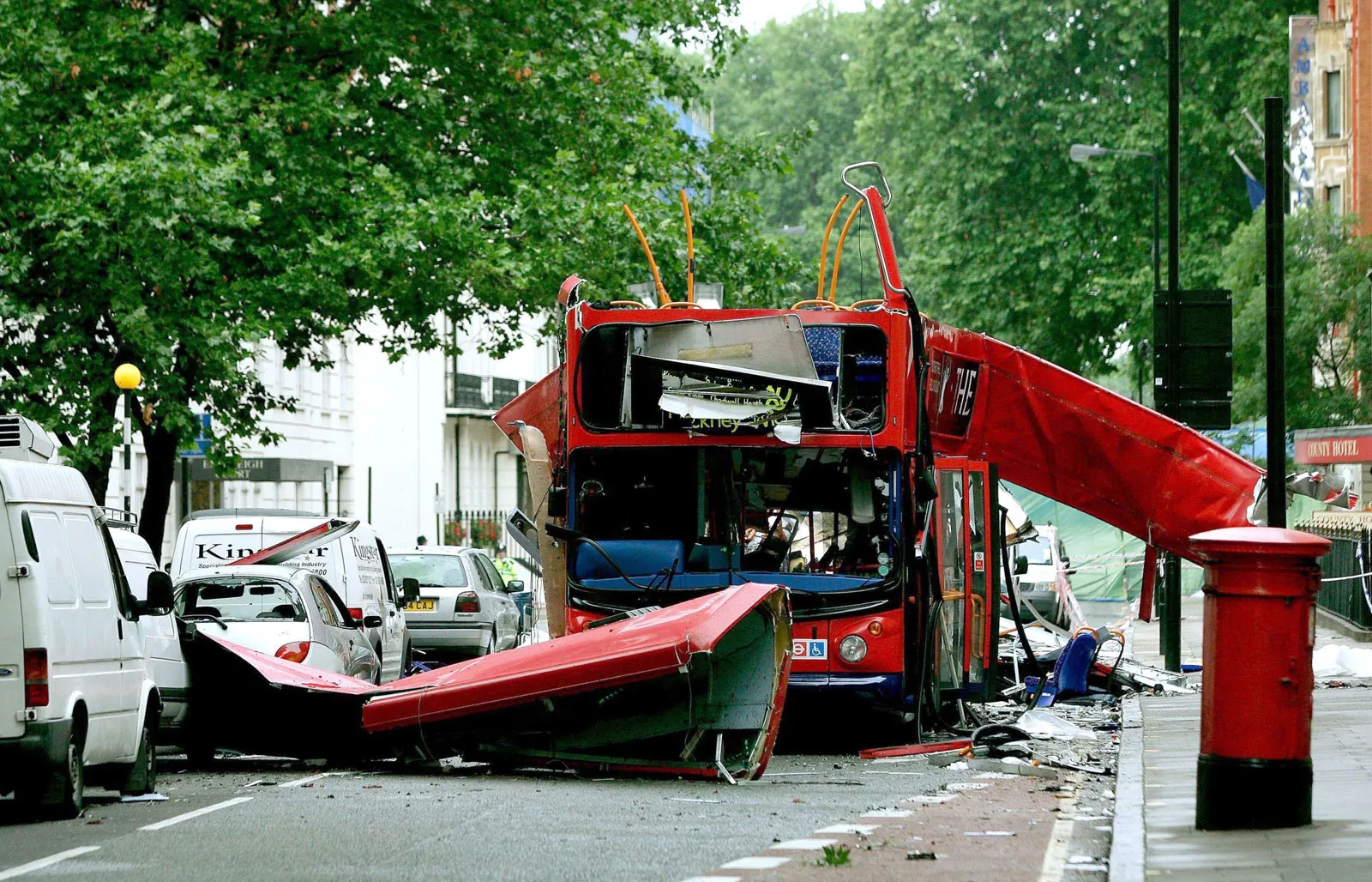
On the morning of 7 July 2005, four men carrying rucksack bombs travelled from Luton to London and boarded public transport at King's Cross station. At approximately 8:50 a.m., three bombs were detonated on London Underground trains: one on the Circle line between Liverpool Street and Aldgate, a second on the Circle line between Edgware Road and Paddington, and a third on the Piccadilly line between King's Cross and Russell Square. Approximately one hour later, a fourth bomb was detonated on the upper deck of a Number 30 bus in Tavistock Square.
The attacks killed 52 members of the public and wounded nearly 800 others, in addition to the four bombers who died in the explosions. The Piccadilly line bombing was the deepest underground blast and caused the highest single-site casualties. The attacks were the deadliest terrorist incident on British soil since the Lockerbie bombing.
Attribution
The four bombers were Mohammad Sidique Khan, Shehzad Tanweer, Germaine Lindsay, and Hasib Hussain. Khan, Tanweer, and Hussain were British-born men of Pakistani heritage from West Yorkshire; Lindsay was a British-Jamaican convert to Islam from Luton. Investigators established that Khan and Tanweer had travelled to Pakistan in 2004 and made contact with al-Qaeda-linked individuals. A martyrdom video recorded by Khan and released by al-Qaeda media after the attack cited British foreign policy in Iraq and Afghanistan as his stated motivation.
Ayman al-Zawahiri claimed that al-Qaeda had directed the attack in a video statement released in September 2005. The full extent of operational direction from al-Qaeda's central organisation versus autonomous radicalisation remained a subject of intelligence debate.
Legal Proceedings
A series of prosecutions followed the discovery of the wider network. Several individuals were convicted of failing to disclose information about the conspiracy, including family members and associates of the bombers. A July 2005 attempt at a second wave of bombings two weeks later on 21 July, in which four devices failed to detonate, led to additional prosecutions; the four attempted bombers were each sentenced to a minimum of 40 years' imprisonment.
A coroner's inquest into the 52 deaths, presided over by Lady Justice Hallett, concluded in May 2011. The inquest examined the emergency response and concluded that there had been systemic failures in communication between underground staff and emergency services that contributed to preventable deaths, particularly in the Aldgate bombing.
Context
The 7/7 attacks prompted an immediate and significant reassessment of the threat posed by British-born radicals. The Security Service (MI5) had previously assessed the primary threat to the United Kingdom as coming from overseas operatives rather than citizens. The bombings initiated a major expansion of MI5 and counter-terrorism policing resources and a reorientation toward monitoring domestic networks. The attacks also contributed to legislative measures including the Terrorism Act 2006, which extended maximum pre-charge detention and criminalised the glorification of terrorism.
The involvement of apparently integrated young British men raised broader questions about radicalisation pathways, the role of foreign policy grievances, and the effectiveness of community engagement as a counter-terrorism tool.
Sources
- 1London bombings of 2005
Britannica · 2026-06-23 · Academic