Incident
September 11 Attacks
Nineteen al-Qaeda operatives hijacked four commercial airliners on 11 September 2001 and carried out coordinated suicide attacks against targets in the United States, killing 2,977 people in the worst terrorist attack in recorded history. Two aircraft were flown into the Twin Towers of the World Trade Center in New York City, one into the Pentagon in Arlington, Virginia, and a fourth crashed near Shanksville, Pennsylvania after passengers attempted to retake the plane. The attacks were directed by Usama bin Laden, who was killed by United States forces in Abbottabad, Pakistan in May 2011. The attacks fundamentally reshaped global counter-terrorism policy and prompted the invasion of Afghanistan.
Date
2001-09-11
Status
documentedUpdated
2026-06-23
Location
New York City, Arlington, and Shanksville
Attributed To
Al-Qaeda
Casualties
2977 killed, 6000+ injured
Overview
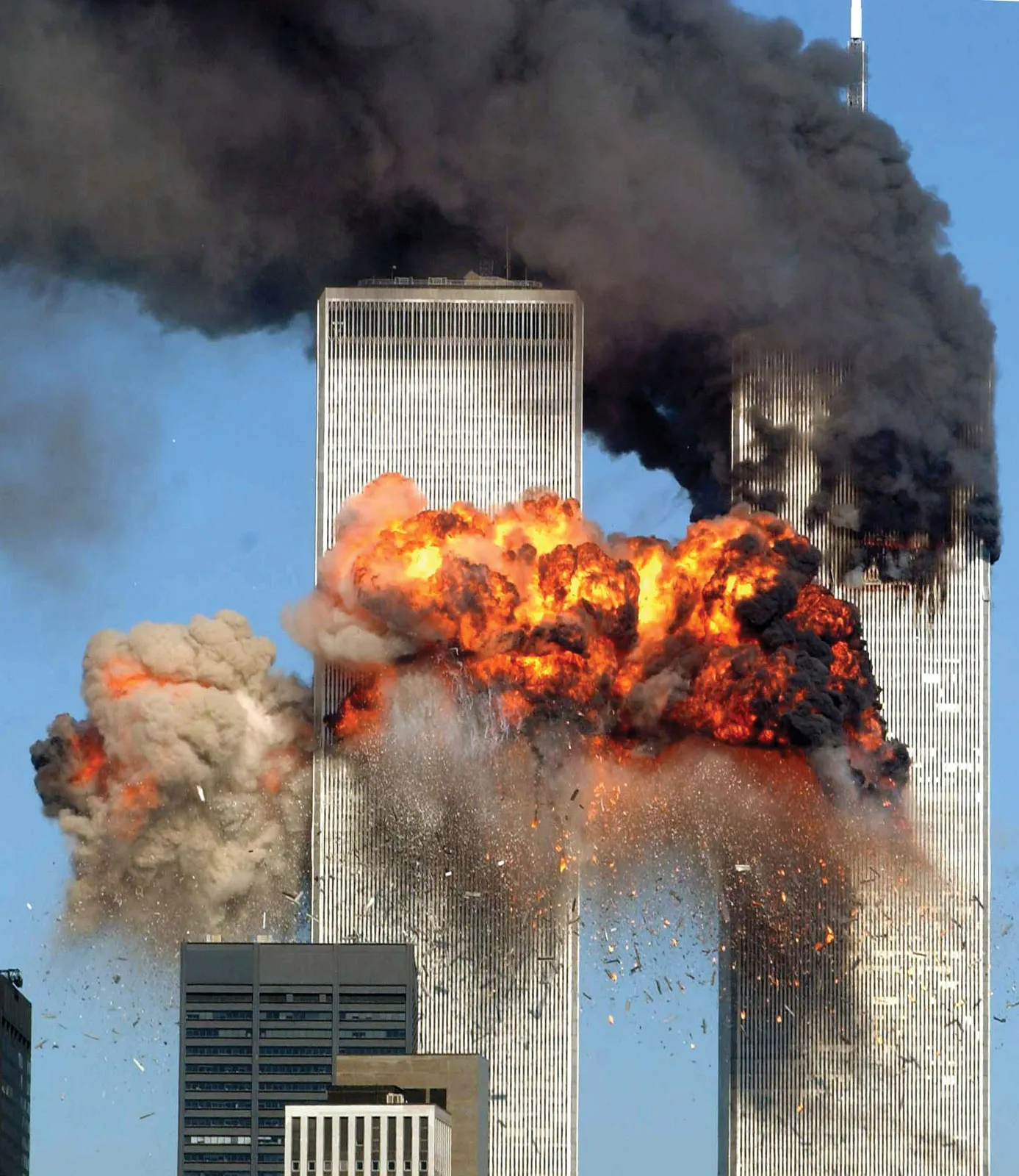
On the morning of 11 September 2001, nineteen men affiliated with al-Qaeda hijacked four commercial passenger aircraft departing from airports on the United States East Coast. At 8:46 a.m., American Airlines Flight 11 was flown into the North Tower of the World Trade Center in New York City. Seventeen minutes later, United Airlines Flight 175 struck the South Tower. At 9:37 a.m., American Airlines Flight 77 was crashed into the western facade of the Pentagon in Arlington, Virginia. The South Tower collapsed at 9:59 a.m. and the North Tower at 10:28 a.m.
United Airlines Flight 93, the fourth aircraft, was targeted at a site in Washington D.C., likely the United States Capitol or the White House. Passengers who learned of the other attacks through phone calls attempted to storm the cockpit, and the aircraft crashed into a field near Shanksville, Pennsylvania at 10:03 a.m., killing all 44 on board.
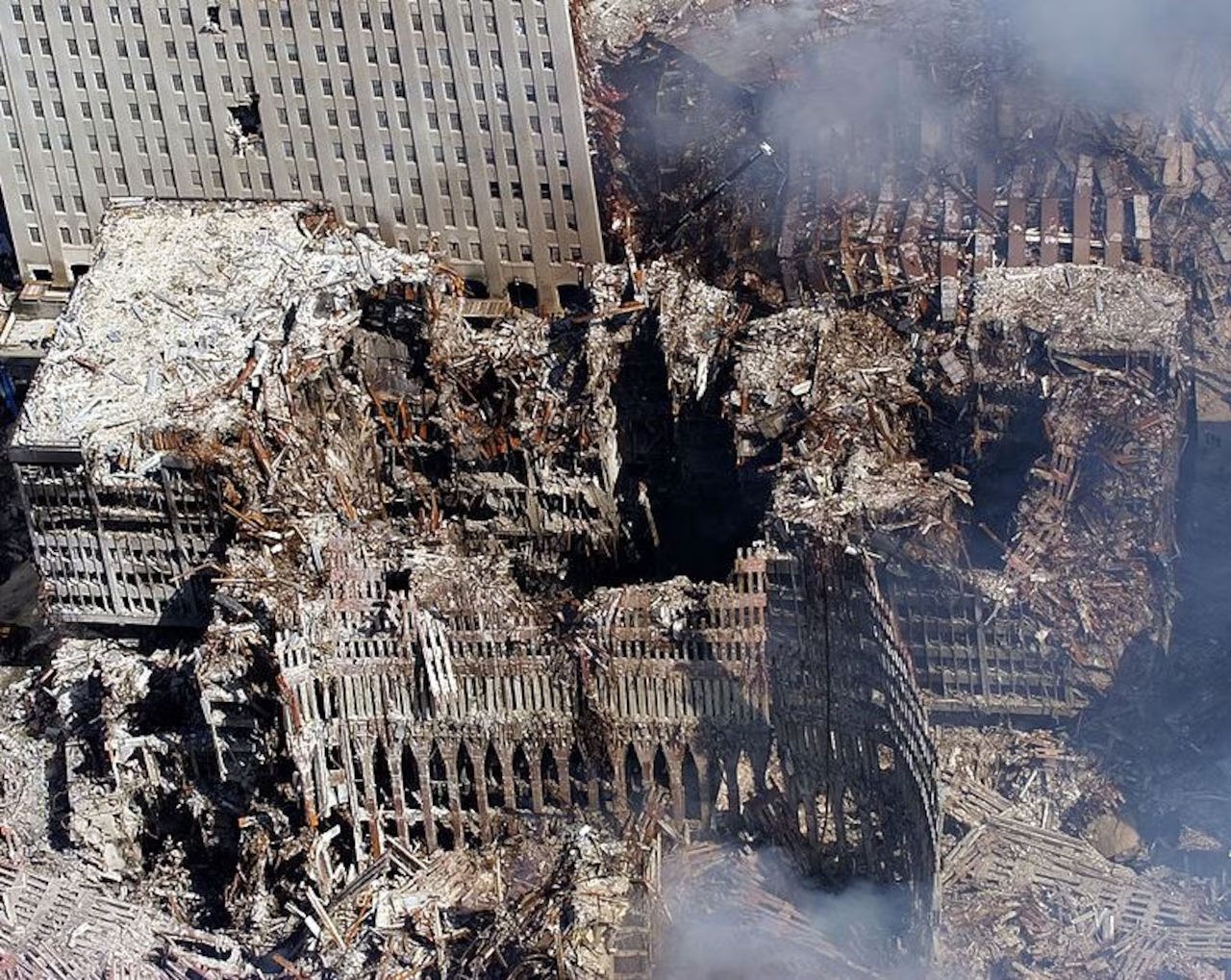
In total, 2,977 people were killed, not counting the 19 hijackers. The dead included office workers, firefighters, police officers, and passengers on all four flights. Approximately 6,000 people were injured. The collapse of the Twin Towers also caused long-term health consequences for first responders and survivors due to toxic dust exposure.
Attribution
Al-Qaeda and its leader Usama bin Laden directed the operation. The 9/11 Commission, established by the United States Congress, published a comprehensive account in 2004 documenting the planning, financing, and execution of the attacks. Bin Laden initially denied involvement before later acknowledging it in video statements. Khalid Sheikh Mohammed, identified as the principal architect of the operational planning, was captured in Pakistan in 2003 and remains in detention at Guantanamo Bay pending military commission proceedings.
Usama bin Laden was located in a compound in Abbottabad, Pakistan and killed by United States Navy SEALs during Operation Neptune Spear on 2 May 2011.
Legal Proceedings
The United States government prosecuted Zacarias Moussaoui, who had been arrested before the attacks on immigration violations, on charges of conspiracy. He pleaded guilty in 2005 and was sentenced to life imprisonment in 2006. Military commission proceedings against Khalid Sheikh Mohammed and four co-defendants at Guantanamo Bay have proceeded slowly over two decades, with unresolved legal disputes over the admissibility of evidence obtained through enhanced interrogation techniques. A plea agreement reached in 2024 was subsequently revoked.
Civil litigation under the Justice Against Sponsors of Terrorism Act has implicated Saudi government officials and institutions in the planning and financing of the attacks, with proceedings ongoing as of 2026.
Context
The 9/11 attacks were the culmination of a series of al-Qaeda operations against United States interests abroad, including the 1998 embassy bombings in Kenya and Tanzania and the 2000 attack on USS Cole in Yemen. Bin Laden's ideology framed the attacks as a defensive response to United States military presence in the Arabian Peninsula and support for Israel.
The attacks triggered the United States-led invasion of Afghanistan in October 2001 to dismantle al-Qaeda's sanctuary under the Taliban government. They also prompted the creation of the Department of Homeland Security, the passage of the USA PATRIOT Act, the establishment of the Transportation Security Administration, and the broader framework of post-9/11 counter-terrorism cooperation among allied governments.
International Response
The United Nations Security Council passed Resolution 1368 the day after the attacks, recognising the right of individual and collective self-defence. NATO invoked Article 5 of the North Atlantic Treaty for the first time in its history. Governments around the world introduced or strengthened counter-terrorism legislation, enhanced border security measures, and deepened intelligence-sharing arrangements. The attacks prompted a sustained global conversation about the relationship between civil liberties and security, and their legal and institutional consequences continue to shape counter-terrorism frameworks more than two decades later.
Sources
- 1September 11 attacks
Britannica · 2026-06-23 · Academic
- 29/11 Investigation
FBI · 2026-06-23 · Government Report
- 39/11 FAQs
9/11 Memorial · 2026-06-23 · Other