Incident
2001 Indian Parliament Attack
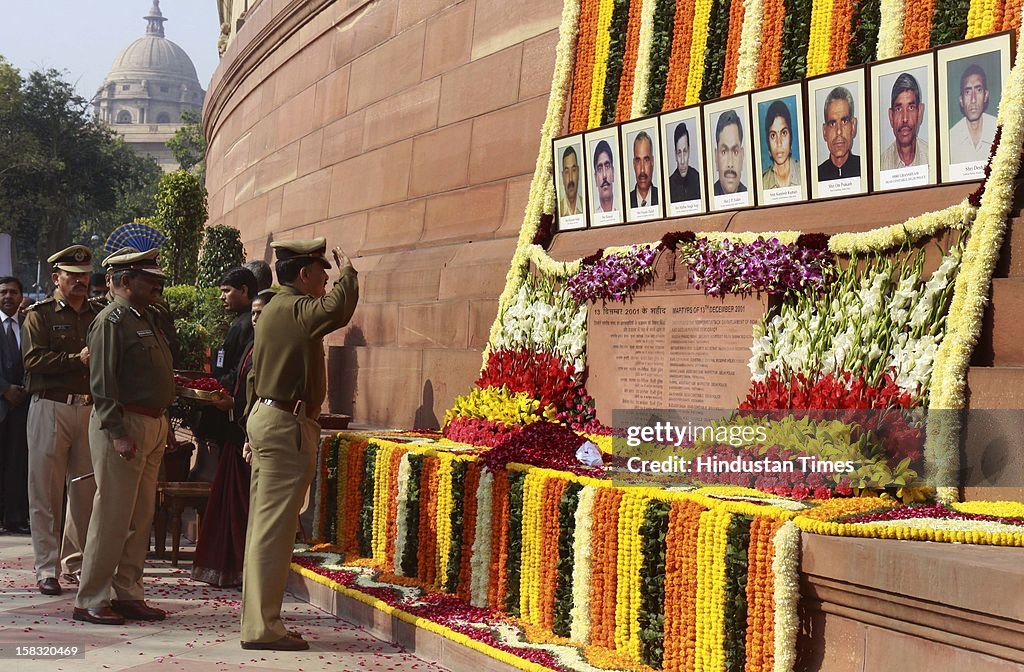
Five gunmen entered the Parliament of India complex in New Delhi on 13 December 2001 in a vehicle bearing false identification markings and opened fire on security personnel. Nine people were killed, including six Delhi Police officers, two Parliament Security Service members, and one gardener; all five attackers were also killed. Indian authorities attributed the attack to Jaish-e-Mohammed, and the incident triggered a prolonged military standoff between India and Pakistan that lasted through most of 2002.
Date
2001-12-13
Status
documentedUpdated
2026-06-23
Location
New Delhi
Attributed To
Jaish-e-Mohammed
Casualties
9 killed, 18+ injured
Overview
On 13 December 2001, five armed men entered the Parliament of India complex in New Delhi shortly after the winter session had concluded for the day. The attackers arrived in a white Ambassador car bearing a Home Ministry sticker, a vehicle subsequently found to have false credentials. Security forces manning the Parliament gate became suspicious when the vehicle did not yield to the Vice President's convoy and challenged the occupants, at which point the attackers opened fire.
The ensuing gun battle lasted approximately 30 to 45 minutes. Nine people were killed: six Delhi Police personnel, two members of the Parliament Security Service, and one gardener. Approximately 18 others were injured. All five attackers were killed during the engagement. The Parliament building itself was not breached, and no elected officials were harmed.
Attribution
Indian investigators attributed the attack to Jaish-e-Mohammed, the Pakistan-based militant organisation founded by Masood Azhar in 2000 after his release in exchange for hostages during the Indian Airlines IC-814 hijacking in 1999. Indian authorities also alleged involvement by Lashkar-e-Taiba, though Lashkar publicly denied participation. The Indian government presented evidence to Pakistan demanding the handover of named individuals, including Masood Azhar, which Pakistan declined to act upon.
Legal Proceedings
Indian authorities arrested several individuals in connection with the attack. Mohammed Afzal Guru, a Kashmiri resident, was convicted of conspiracy and sentenced to death by the Delhi High Court in 2003, a sentence upheld by the Supreme Court in 2005. After lengthy delays and a public controversy over his clemency petition, Afzal Guru was hanged on 9 February 2013. His case was contested by human rights advocates who raised concerns about due process, while others argued the conviction was appropriate given the gravity of the attack.
S.A.R. Geelani, a university lecturer initially convicted alongside Afzal Guru, was acquitted by the Delhi High Court in 2003 after the court found the evidence against him insufficient.
Context
The attack came less than three months after the September 11 attacks and occurred at a moment of heightened global attention to state-sponsored terrorism. India had long accused Pakistan's Inter-Services Intelligence of supporting Jaish-e-Mohammed and Lashkar-e-Taiba as instruments of proxy conflict in Jammu and Kashmir.
International Response
Following the attack, India withdrew its High Commissioner from Islamabad, suspended road and rail links with Pakistan, and mobilised approximately 500,000 troops along the Line of Control and the international border in what became known as Operation Parakram. The standoff persisted through most of 2002, representing one of the most dangerous confrontations between the two nuclear-armed states. Both countries' forces were placed on high alert for an extended period. United States diplomatic intervention, including visits by Deputy Secretary of State Richard Armitage, helped de-escalate the crisis. The standoff eventually ended without armed conflict, though tensions remained elevated for years.
Sources
- 1Jaish-i-Mohammed - UN 1267 Sanctions List
United Nations Security Council · 2026-06-23 · Designation Database